
Exploring the Contested Boundaries of Diasporic Chineseness in Mainland Chinese Discourse
Introduction
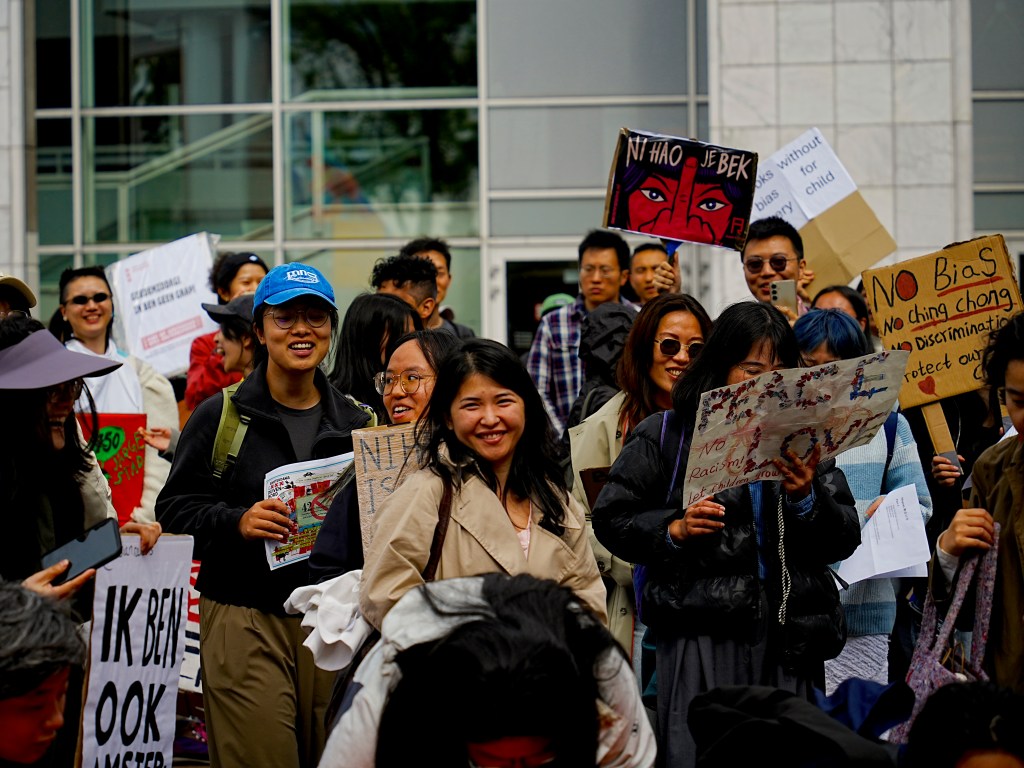
2025 is the 750th anniversary of the founding of Amsterdam. As part of the celebrations, an educational book distributed to schoolchildren included a boardgame criticised as racist. In response, Chinese Dutch residents and international students organised a peace rally to advocate for respect and ethnic rights. However, when the event reached Chinese social media, the dominant reaction was not solidarity but hostility. In comparison, in the 2026 Winter Olympics, Chinese American figure skater Alysa Liu received popular support from the same public, though she competed for the United States. This contradiction of rejecting some overseas Chinese but embracing others points to an unresolved tension within Chinese popular discourse on ethnic belonging: in contemporary Chinese discourse, who defines the ethnic boundaries of the Chinese diaspora, by what standards and what produces the contradictions within these standards? Rather than examining how overseas Chinese define themselves, this paper investigates how they are defined by others – the PRC state and the mainland Chinese public. This paper argues that overseas Chinese face two parallel systems of identity definition – the instrumental official discourse and selective popular discourse, and the coexistence of these two systems generates a structural dilemma rooted in the historical divergence between official and popular narratives.
Imagined Boundaries: Theoretical Framework
The core of this question lies in the problem of boundary: who is recognised as belonging to the Chinese national community, and based on what standard? Anderson theorises the nation as an “imagined political community”, which is imagined as both inherently limited and sovereign.[1] The community is “imagined” in the sense that its members conceive of a shared collective bond without direct acquaintance – a mainland Chinese citizen may never encounter any overseas Chinese, but still holds assumptions about whether they belong to the same national community. More importantly, this community is imagined as “limited” in the sense that this bond has finite boundaries, and determining who belongs within them remains uncertain. To examine how these boundaries are drawn in the case of overseas Chinese, this paper identifies two parallel systems of boundary-drawing: the PRC’s official discourse, whose instrumental redefinitions across different political periods are traced through Barabantseva’s historical analysis; and the popular discourse as expressed on Chinese social media, where mainland Chinese articulate their own evaluative criteria for belonging. To describe the complex situation of boundary-drawing, Show and Sai’s concept of the “uneven terrain” of diasporic Chineseness captures its situational and uneven nature. However, their issue approaches this unevenness primarily from the perspective of diasporic communities. This paper shifts the focus to investigating how this unevenness is represented from within mainland Chinese discourse, and argues that the coexistence of these systems that operate on distinct logics generates a structural dilemma for overseas Chinese.
Redefining Belonging: Official Discourse across Political Periods
The PRC’s official discourse on overseas Chinese identity has consistently been instrumental, adjusted to serve the state’s shifting needs rather than following a stable ethnic or cultural logic. While each historical period involved multiple considerations, the dominant driver shifted from political mobilisation to economic utility to cultural soft power.
In the early years of the PRC, overseas Chinese were incorporated into Mao Zedong’s “United Front”, which was a political strategy aimed at uniting all available forces to consolidate the new socialist government and ensure its legitimacy. As Barabantseva mentions, in official rhetoric, “‘minority nationalities and overseas Chinese’ appeared next to each other as if they occupied similar roles in the socialist project of the Chinese state.”[2] However, this inclusion was never grounded in cultural affinity. It was a mobilisation strategy driven by the need for political legitimacy and material resources. This instrumental logic became more visible when the PRC’s diplomatic priorities shifted at the 1955 Bandung Conference. To reassure Southeast Asian countries that China would not use diaspora communities as political leverage, the PRC signed agreements abandoning the jus sanguinis principle (the legal principle that nationality is determined by descent) and the institution of dual nationality, and introduced the “three good policies of nationality, noninterference and resettlement”, encouraging overseas Chinese to assimilate locally, excluded them from the People’s United Front. During the Cultural Revolution, the exclusion further deepened. Overseas Chinese were labelled bourgeois elements, and domestic citizens who maintained connections with them also faced political persecution.[3] Across this entire period, the boundary of who counted as “Chinese” expanded or contracted not according to any consistent ethnic or cultural criterion, but in direct response to the state’s political requirements.
In the period of the Reform and Opening-up, when China transitioned to a market economy after 1978, the state’s need for foreign capital and expertise prompted another redefinition. The overseas Chinese were once again reframed as valuable assets to China’s modernisation project – their economic utility was rediscovered, and the previous exclusion was unacknowledged. The establishment of the Overseas Chinese Affairs Office (OCAO) in 1978 institutionalised this shift, creating a nationwide mechanism to manage and reclaim ties with the diaspora. As Barabantseva observes, “there is an assumption that the overseas Chinese belong to China” and they are “referred to as an aspect of China’s ‘unique national condition’” that grants China legitimacy to incorporate them into its modernisation project and other national endeavours.[4] The overseas Chinese were not invited as equal participants, but reclaimed as assets whose value had been temporarily overlooked.
Under the leadership of Xi Jinping, the contemporary official discourse has shifted again, becoming increasingly oriented towards cultural soft power. The official narrative deliberately blurred the distinction between overseas Chinese citizens (huaqiao) and ethnic Chinese abroad (huaren), giving them the same consideration in the PRC’s overseas Chinese policy.[5] This blurring serves not only political and economic purposes, but also a cultural agenda. For overseas Chinese communities, Chinese media agencies have served as the communication pathways for Chinese culture and language, while the contemporary Xi government has devoted resources to controlling traditional diasporic media and innovating China’s international broadcasting to target the younger generation.[6] The overseas Chinese community is no longer valued merely for its economic capital, but increasingly mobilised for its potential to project a favourable image of China abroad.
Across these historical stages, what remains consistent is not the content of the discourse, but its logic: the PRC’s official framing of overseas Chinese identity has always been adjusted to serve the state’s political, economic, and cultural requirements. Whether overseas Chinese were excluded as diplomatic liabilities, dismissed as “class enemies”, invited as economic contributors, or mobilised as cultural ambassadors, their identity was defined by whatever the state required at the time. This flexibility raises a question: if the official boundary of Chineseness has been unstable, has popular discourse simply followed these shifts, or has it developed an independent logic of its own?
Honour and Exclusion: Popular Discourse on Social Media
Popular discourse on overseas Chinese identity has not simply followed the shifts in official framing, instead, it operates through its own logic, centred on a sense of ethnic honour. Overseas Chinese who are perceived as enhancing China’s national image tend to be embraced, while the others are excluded. This embodies a contextual double standard that fundamentally differs from the official discourse’s instrumental flexibility. As Show and Sai conclude, diasporic Chineseness is portrayed as highly situational and represents an “uneven terrain.”[7] The following analysis of contemporary social media content explores how this unevenness is actively produced within mainland Chinese popular discourse.
When overseas Chinese fail to conform to this honour-oriented standard, popular discourse responds with exclusion. The Amsterdam rally is essentially where the overseas Chinese in the Netherlands protested for ethnic and broader Asian rights, and was widely posted on Chinese social media platforms. As shown in Figure 1-5, the dominant reactions were hostile: most comments drew a distinction between “real Chinese” and overseas Chinese, refusing to recognise the protesters as part of the ethnic community. This rejection was not based on the protester’s nationality or legal status, but on the act of public protest abroad. Although this rally is in defence of the broad Chinese ethnic rights, it was still perceived as disruptive and potentially embarrassing to China’s image. Within the honour-oriented framework of popular discourse, even the most moderate collective action risks being read as causing trouble in a foreign context, thereby disgracing the Chinese collective rather than defending it.
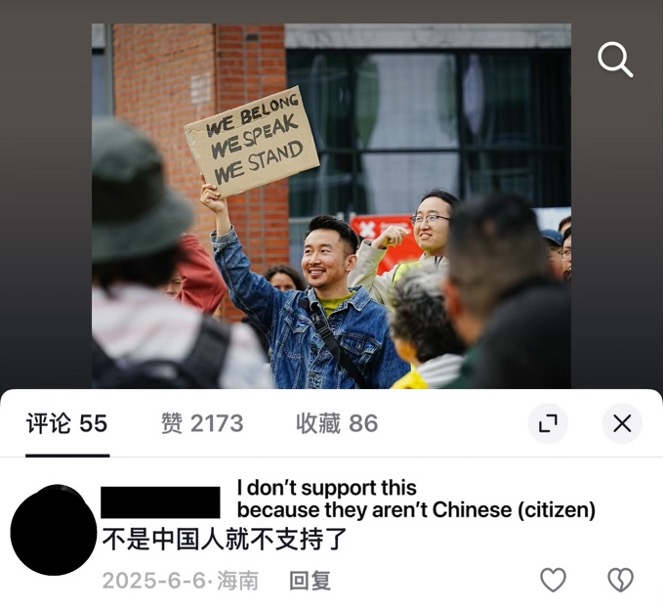
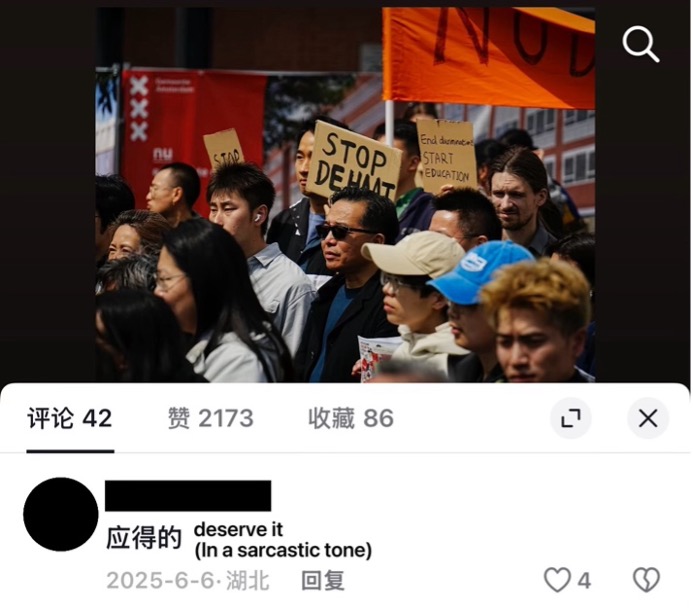
Figure 1&2, screenshotted from the author’s Douyin post’s comment section
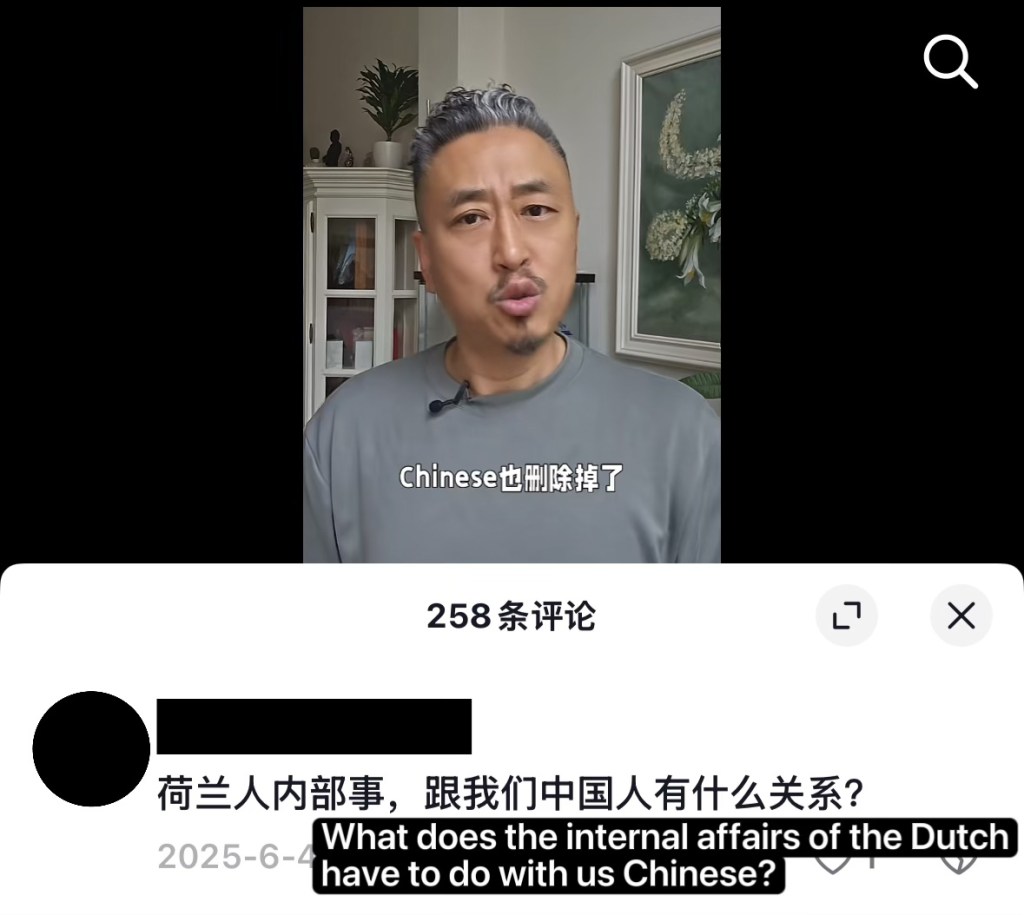

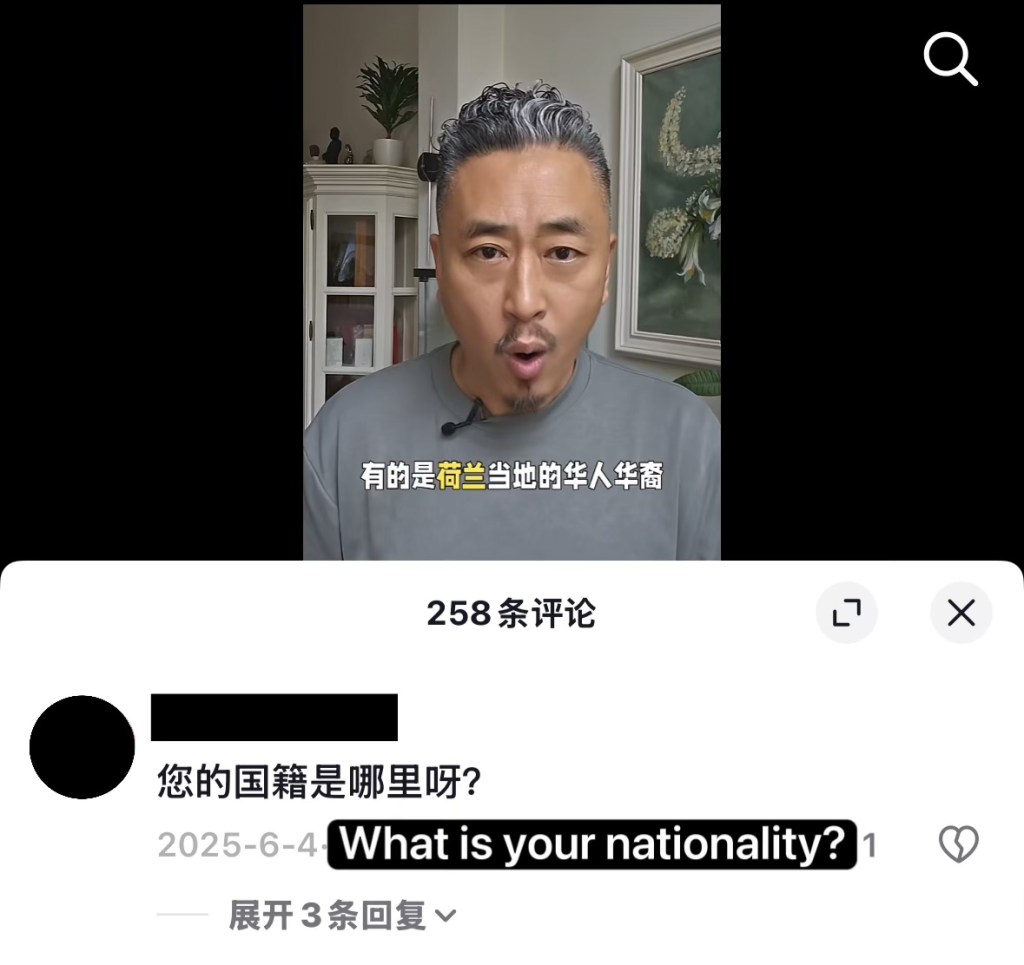
Figure 3-5, screenshotted from the Douyin video’s comment section of Liu Cheng, a Chinese Dutch politician who participated in the rally.
Furthermore, this exclusionary reaction is underpinned by what Anderson describes as the emotional foundation of this imagined community: the imagination of the nation as a deep, horizontal comradeship.[8] Within this framework, emigration itself can be perceived as a withdrawal from the collective bond, and public behaviour that risks harming the national image only deepens this perceived betrayal. However, as the following case reveals, this suspicion is not permanent but can be ignored when an overseas Chinese individual is seen as restoring honour to the community they have left.
The figure skater Alysa Liu competed for the United States in the 2026 Winter Olympics, and her father had fled China seeking political asylum after the 1989 student movement.[9] This is a background that should place her at the furthest distance from China by any political measure. However, as shown in Figure 6-8, she received substantial popular support. Although some commenters questioned her background, a significant portion of the discourse chose to blur her nationality or ethnically claim her as Chinese based on her descent, and more importantly, her athletic excellence. In the honour-oriented logic of popular discourse, Liu’s achievement on the international stage and her capacity to contribute to the ethnic image of the Chinese predominated over her sensitive background. The standard applied here is neither nationality nor political loyalty, but whether the individual enhances or diminishes the perceived reputation of the Chinese collective.
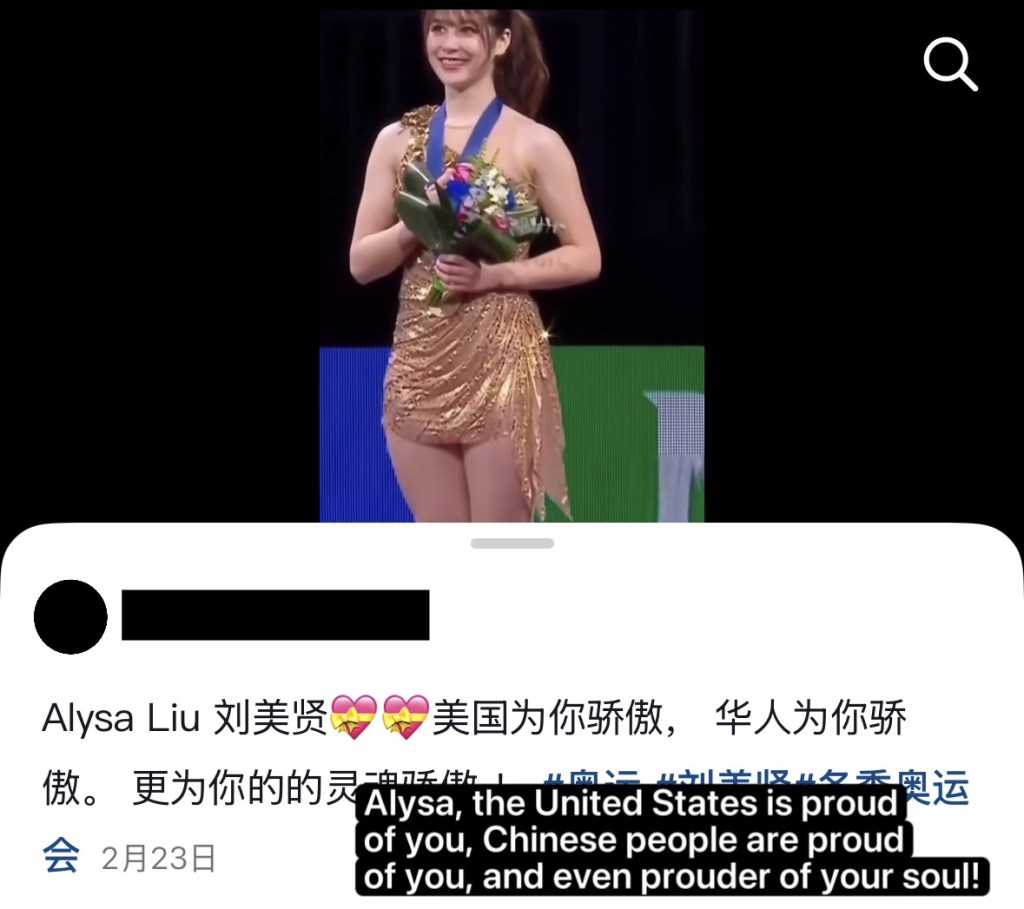
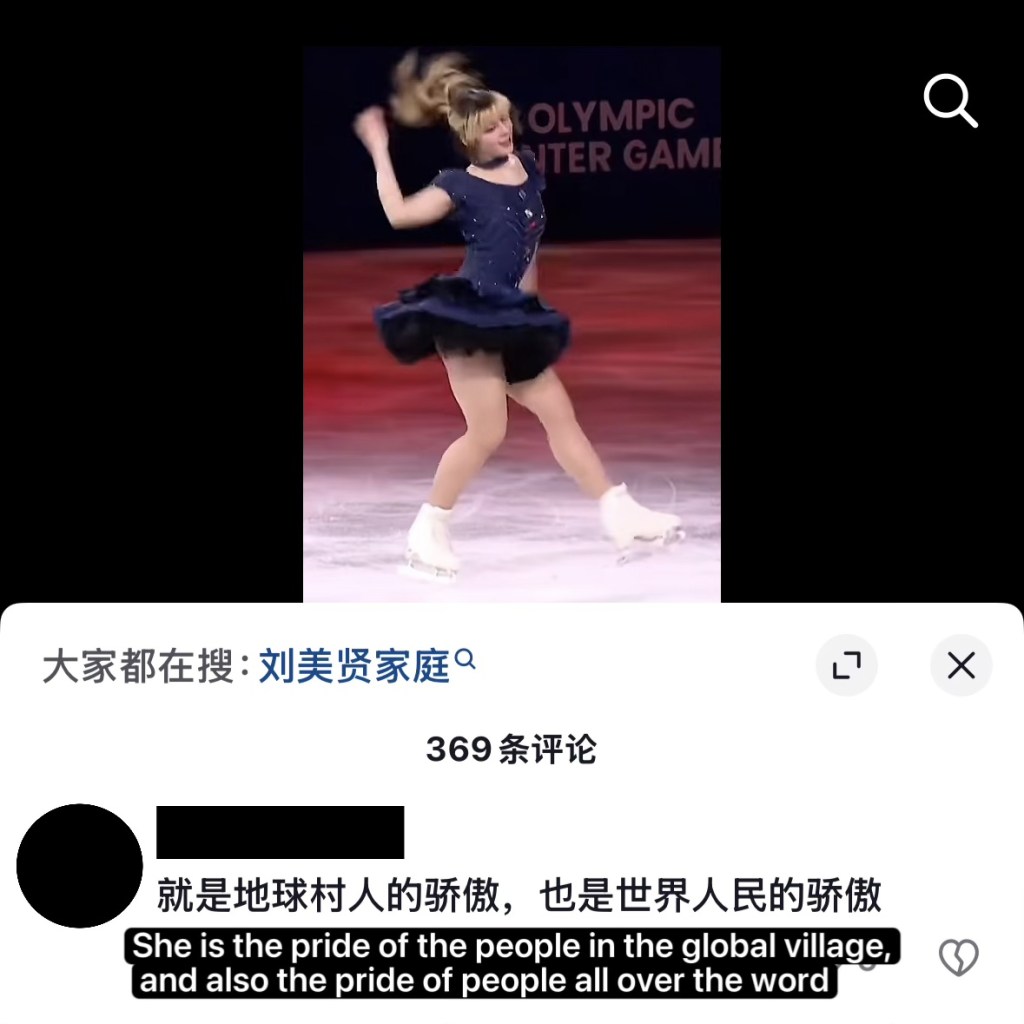
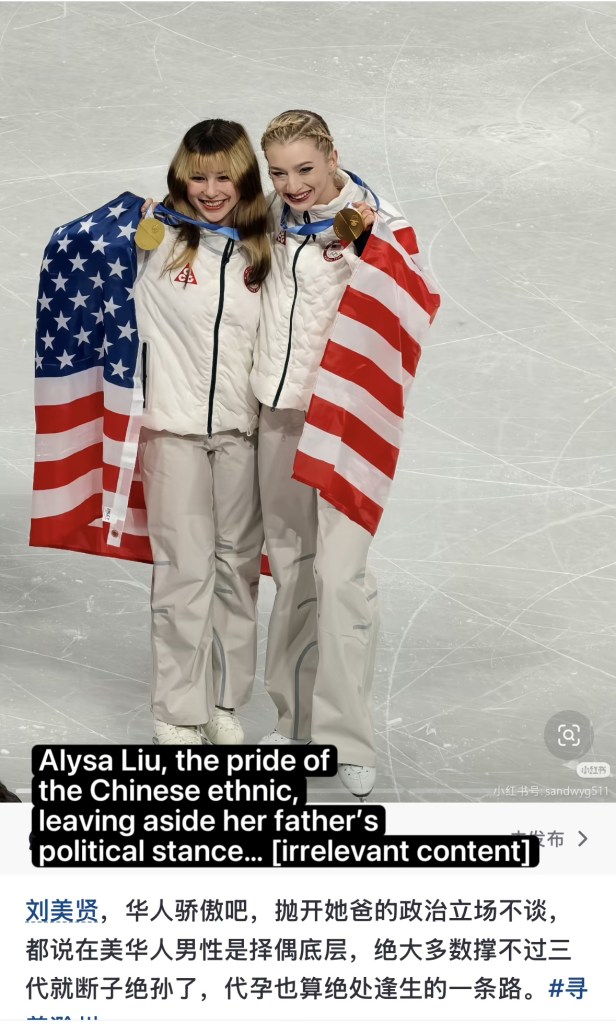
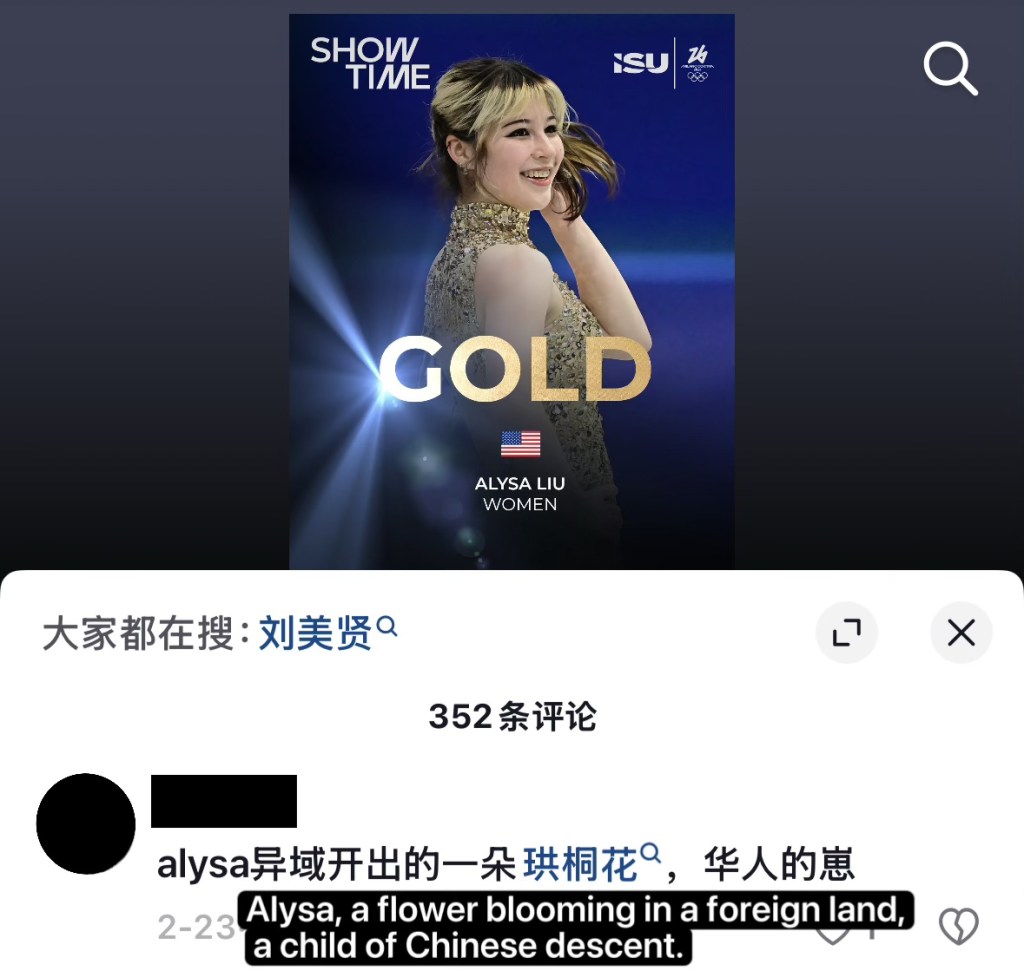
Figure 6 – 9, screenshotted from Douyin post and comment sections
The contrast between these two cases reveals the core mechanism of popular discourse – a contextual double standard assessed by ethnic honour. The Amsterdam protesters, despite their Chinese descent, were excluded because their actions were perceived as damaging to the ethnic image; Alysa Liu, despite her sensitive background, was embraced because her success embodied positively on the collective. This popular logic operates on criteria that are different from the official instrumental flexibility, while the two logics are not entirely independent from each other.
Divergence and Interaction
The divergence between official and popular discourse is not accidental but rooted in their fundamentally different modes of operation. Official discourse is top-down and strategic: as demonstrated above, it has been repeatedly adjusted in response to shifting political, economic, and cultural priorities. In contrast, popular discourse is bottom-up and affective, once a particular attitude is formed and evokes emotional resonance, it develops its own inertia and does not instantly and automatically update when the official narrative changes. Notably, the PRC’s early stages’ framing of emigration as a form of abandonment settled into popular consciousness as a fundamental suspicion towards those who exit this imagined community. When the official discourse later reversed the narrative, these revisions did not fully permeate the popular level that retained the earlier exclusionary inertia.
However, the two discourses are not entirely independent. The popular honour-oriented standard shares a crucial dimension with the contemporary official discourse under the Xi government: both evaluate overseas Chinese through the lens of cultural image – whether they contribute to or detract from China’s reputation in global society. The divergence does not lie in this shared evaluative framework, but in how it is applied. The official discourse operates inclusively, seeking to broaden the boundary of belonging to incorporate more overseas Chinese into the state’s cultural and political project. In contrast, popular discourse applies the same logic exclusively, only accepting those individuals who are perceived as enhancing ethnic prestige. In this sense, popular discourse has not simply inherited the official attitude, it has absorbed its cultural evaluative dimension while generating its own restrictive criteria for belonging.
This dynamic has significant implications for how we understand the position of overseas Chinese. Their ethnic identity is not merely a matter of internal self-recognition, but simultaneously subject to external judgement by the mainland Chinese public, whose criteria of acceptance can be contradictory and contextual as the analysis shows. An overseas Chinese individual may strongly identify as Chinese, while finding themselves excluded by the community they claim to belong to. This constitutes a structural dilemma that persists as long as the two systems continue to operate on different standards. Furthermore, this finding also offers a complementary perspective to the scholarly discussion on diasporic Chineseness. Show and Sai’s editorial and issue examine the “uneven terrain” of diasporic identity primarily from the perspective of diasporic communities – their subjective identifications, cultural negotiations, and political positioning – while the analysis above suggests that this terrain is also actively shaped from the external objective judgements and standards of the mainland Chinese public. The inclusion or exclusion revealed through popular discourse constitutes an additional layer of the Chinese ethnic landscape – a layer that operates coherently, and sometimes in tension with both official state policy and diasporic self-identification.
Conclusion
In conclusion, the overseas Chinese are simultaneously subject to two parallel systems of identity definition: an official discourse that is instrumental and strategically inclusive, and a popular discourse that is honour-oriented and selectively exclusive. Anderson uses the metaphor of “stretching the short, tight skin of the nation over the gigantic body of the empire”[10] to describe the official nationalism, while I suggest that China’s contemporary approach is closer to draping a loose, oversized cloth over a body that has not grown to fill it. This cloth appears spacious enough for others to share, but those who attempt to wear it will find that it has been worn and occupied – this situation persists as long as the two systems continue to coexist on divergent standards. Furthermore, several dimensions are beyond the scope of this analysis but appear highly relevant. The reliance on social media content exposes the characteristics of digital media – does algorithmic curation and echo chamber effects amplify the divergence between these two discourses, and to what extent is the observed public opinion organic rather than shaped by official censorship? Regarding the honour-oriented logic identified here, it also appears in a domestic context – such as the public evaluation of Chinese athletes – though without reaching the level of ethnic boundary, whether this logic is specific to the emigration context, or reflects a broader pattern? Although the narrow perspective and limited scope of this essay do not permit a comprehensive account of this issue, we can still notice the structural dilemma confronting overseas Chinese in the contemporary era and the need for greater humanistic attention to the diasporic experience. After all, the dispersed diaspora remains spores from the same soil.
Afterwords
Since this essay is an academic assignment, I cannot integrate too much personal emotion in the writing — but I did have so many complex feelings, especially when I was writing the historical part. I love my country, my ethnicity, my culture and my compatriots, while this deep love for my identity is rooted in a cultural sense rather than a political one. Therefore I couldn’t help taking the overseas Chinese’s perspective to reconsider this situation — feeling angry at the cold state apparatus, at the brutality of some mainland Chinese, but what weighs more is the sorrow brought by this brutal reality: “I” am still Chinese, but the sense of belonging might never fully come back. When I dissociate myself from their perspective, a stronger sense of helplessness comes to mind. When the vicious comments appeared in my comment section, I knew they were not judging me — I still hold a Chinese passport. But weren’t they, in some way, talking about me? Or should I ask: who am I, who are they, who is Chinese — are we Chinese? I can’t help imagining, when an old Chinese immigrant is approaching death outside the motherland — after witnessing the changing narratives around overseas Chinese, rewinding the reasons they left home, and how the door was shut when they wanted to return — what is in their last glance towards the east? A home full of memory and imagination, or a cold apparatus with a gate as unyielding as the Great Wall?
[1] Benedict Anderson, Imagined Communities: Reflections on the Origin and Spread of Nationalism, rev. ed. (London: Verso, 2016), 19.
[2] Barabantseva, Overseas Chinese, 40.
[3] Ibid., 58-61.
[4] Barabantseva, Overseas Chinese, 111.
[5] Ibid., 117.
[6] Ding Sheng, “Changing Diasporic Identity and Increasing Global Backlash: The Xi Government’s Tactics and Challenges of Engaging New Generation Overseas Chinese,” Globalizations 22, no. 1 (2025): 158, https://doi.org/10.1080/14747731.2024.2373055.
[7] Ying Xin Show and Siew-Min Sai, “Reassessing the Chinese Diaspora from the South: History, Culture and Narrative,” Inter-Asia Cultural Studies 24, no. 4 (2023): 579, https://doi.org/10.1080/14649373.2023.2221489.
[8] Anderson, Imagined Communities, 20.
[9] Kalyn Kahler, “In Quads We Trust: 13-Year-Old Alysa Liu Is the Future of U.S. Ladies’ Figure Skating,” Sports Illustrated, May 16, 2019, https://web.archive.org/web/20191209234800/https:/www.si.com/olympics/2019/05/16/alysa-liu-us-figure-skating-future-quads.
[10] Anderson, Imagined Communities, 103.


Leave a Reply