
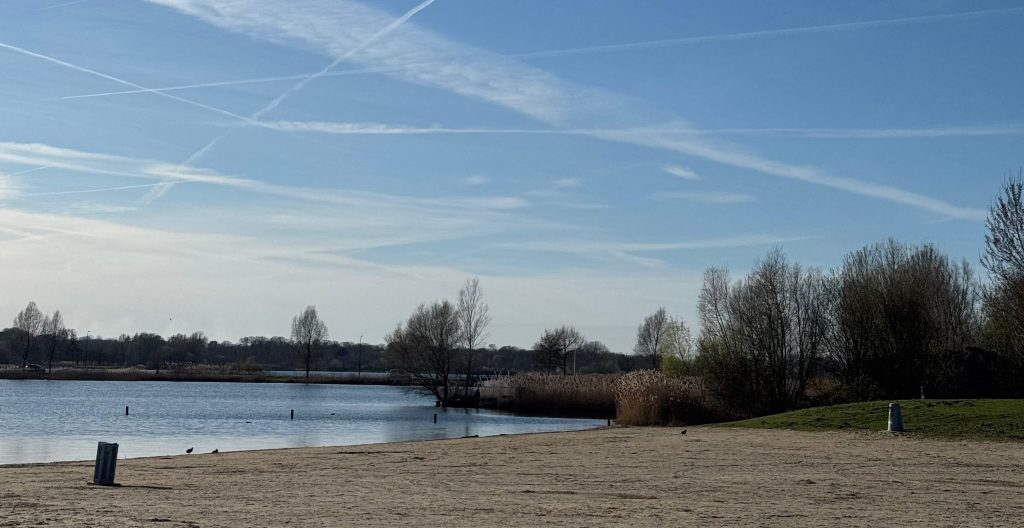
In the past 2 years living in Utrecht, the Netherlands, I often have a weird thought of “I shouldn’t be here.” Especially when Utrecht, compared to Amsterdam or Rotterdam, is “whiter” than these international cities, which makes an Asian appearance seem more obvious when standing with a lot of locals in public.
Once, at midnight, I was waiting for the last sprinter to go back to Maarssen with a few white people standing on the platform in Utrecht Centraal. Then I heard someone shouting somewhere — I didn’t know if they were sober or not. This scene always makes me nervous. This might sound biased, but you never know if these bad-mannered people will hurt you or not. The instant stress at the moment I heard them has two layers: concern for my personal safety, and preparing for the potential racial discrimination I might experience.
I looked around anxiously to make sure of my safety, and caught a glance of the other passengers beside me. They were very chill, focused on their phones as if nothing had happened, acting like those shouts were as normal as the drizzle in the winter Netherlands. The contrast between my anxiety and their peace makes me feel stupid — I’m not a newcomer to this country, I’ve already gotten used to the random chaos as well, but why do I still act like a sensitive psychopath who overreacts to everything in public?
This self-blame is convenient – it pathologises my reaction rather than questioning the condition that produced it. The anxiety I carry on that platform is not merely personal sensitivity, it is a body that has learned, long before this midnight, to anticipate a threat that the white passengers beside me have never been asked to prepare for.
Compared to the occasional nerves and fear, I no longer have a sense of novelty in daily life. I’m proficient in every scene of my life: how to take public transport, what’s the best route to different destinations in the city, where to find the cheapest but good quality daily necessities, how to pay tax, how to apply for allowance… I have managed all the skills to live here efficiently, but this efficiency creates an illusion of being local — and this illusion is fragile. When a real test comes — a shouting on the platform, a stranger’s spit on my clothes, a subtle expression in a real local’s eyes — my embodiment reflects a truth: my identity is never truly “home”, although my cognition has learned how to live here.
When you’re standing on the train platform waiting for the last train, and someone who is drunk or high on drugs is shouting loudly somewhere — at that moment, what kind of concerns will appear in your mind? Merely worrying that they might bother you, or worrying that they might bother you just because of your ethnicity, and further thinking that your existence here is absurd and improper?
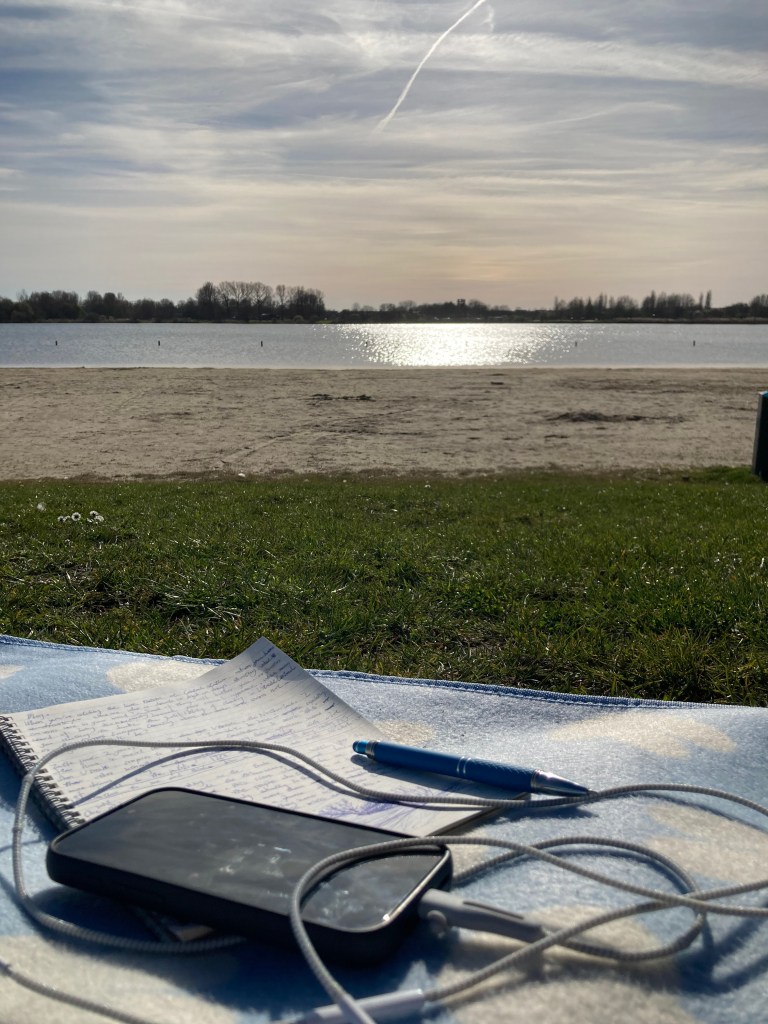
I wrote all the content above beside the Haarrijnseplas lake on a beautiful Friday afternoon, while I wasn’t enjoying the sunlight and writing because there were some children playing on the beach. Unlike decent adults who can fake esteem although they are actually racist, a child’s spite is unadorned, natural, without concern. There were countless times I was spat on by random children and teenagers in the grocery store, on the Maarsserburg, on the way back home from the station. I was afraid that they might stop playing, jump off the swing, and humiliate me — someone much older than them. If that really happened, what should I do? Gently educate them? Angrily curse at them? Wisely discuss it with their parents and risk being discriminated against by a pair of adults? Furthermore, as an immigrant, do I even have the proper subjectivity to react at all?
The platform and the lakeside are different scenes, but the mechanism is the same: no one has said or done anything yet, but I’m already at war with myself — and Fanon gives this war a name.
Fanon describes a feeling of “third-person consciousness” — a state in which racial minorities are forced to reconsider their body and existence through others’, usually unfriendly, perspectives in a society dominated by white people. He introduces two schemas — the corporeal schema and the racial epidermal schema — and the transformation that occurs when facing a white gaze, or an internalised white gaze. [1] Usually, our consciousness is first-person and action-oriented. For instance, when I want to lie down beside the lake, I habitually want to open my conspicuous light blue Nijntje blanket, have a smoke, and write my blog. If I’m alone at that moment, I have implicit knowledge of the lakeside grass — I know where to put my blanket, how to take out a cigarette and light it, where my notebook is. My actions are habitual and my Asian body is a transparent medium helping me realise these orientations. This process works under the corporeal schema. However, when I became aware of the white kids and other passers-by, the third-person consciousness interrupted my action flow and forced me to transform into the racial epidermal schema — watching myself from a white person’s perspective. “Do I take up too much grass? Should I smoke here in nature? Is it odd to write a blog here alone?” So many thoughts about my actions appeared at that moment. My body was no longer an invisible tool for realising my orientations, but had become an overly visible racial symbol. This kind of interruption deprives me of the right to exist without thinking, forcing me to examine through the eyes of others whether my conspicuous picnic blanket and every one of my movements are appropriate.
“‘Doing things’ depends not so much on intrinsic capacity or even on dispositions or habits, but on the ways in which the world is available as a space for action, a space where things ‘have a certain place’ or are ‘in place.’”[2]
Children were playing happily; a few adults took off their clothes beside me and jumped into the lake to swim. White men stood beside me waiting for the train, someone reacted to the shouts with a natural eye-roll. Meanwhile, I — an Asian — anxiously went through a war in my mind, within the same peaceful frame as the white people around me. “Whiteness may function as a form of public comfort by allowing bodies to extend into spaces that have already taken their shape. Those spaces are lived as being comfortable as they allow bodies to fit in; the surfaces of social space are already impressed upon by the shape of such bodies.”[3]
As I said, the “white gaze” could be not only a real gaze from someone, but also an internalised “inner white personality” that self-regulates when in the same scene as white people. There are white eyes from both outside and inside. But where do these eyes come from? Or more specifically — it is not the “eyes” themselves that build the panopticon, but the criteria that make the “eyes” efficient. So what reference establishes these criteria?
“Willy-nilly, the Negro has to wear the livery that the white man has sewed for him. Look at children·s picture magazines: Out of every Negro mouth comes the ritual ‘Yassuh, boss.’ It is even more remarkable in motion pictures. Most of the American fihns for which French dialogue is dubbed in offer the type-Negro: ‘Sho’ good!’”[4]
Eyes come from both outside and inside — this is what I said. But both cases share one condition: I am in their presence, and that presence activates something. What happens, then, when there is no presence at all?
One afternoon, I was curious about what “van” stands for in Dutch surnames. I found out that “van” means “from”, and my name “Rens” based on this can be extended into “Rens van Kalgan” — a complete Dutch-style name. I found this creation interesting and wanted to share it on Instagram. But eventually I didn’t. I unconsciously started to think about how a real Dutch person would react to this weird, exotic immigrant name. Before anyone could see it, before any real or imagined Dutch person could react, the verdict was already in — delivered by something living inside me that I had not invited and could not exorcise.
This is different from everything before. Normally, this self-judgement happens when there are witnesses, even if those witnesses might never actually notice me. Here, there were none. Not even virtual ones. And yet the trial happened anyway, in the most private space I have — my own mind, on an ordinary afternoon, over a joke. The point was never really about how a Dutch person would react. The point is that I had already reacted — to myself, on their behalf, before they had the chance to.
There are also many Western people who have lived in China for years and given themselves a Chinese name, mainly transliterated from their own name with a preferred traditional Chinese surname. I feel happy for them — it’s always good to see someone appreciate and try to integrate into your culture. But will they feel the same way when I am the outsider? Will they treat me the same way I treat them?
Why do I fear? Or should I ask — who taught me to fear?
Who made me feel unsafe even when enjoying a beautiful afternoon? Who taught me to reconsider my actions time and time again? Who made me reconsider my reconsideration and think it is wrong and radical?
All in all, is this self-regulation protecting me, or doing a favour for someone else?
Please remind me — if one day I feel safe and integrated living here, is that a successful integration, or is it my numbed mind already desensitising me to this unfair situation?
“I was responsible at the same time for my body, for my race, for my ancestors. I subjected myself to an objective examination, I discovered my yellowness, my ethnic characteristics; and I was battered down by slanted narrowed eyes, rice and noodles, back kitchens, model behaviour, calculation, the braid, coolies, socialism, and above all else, above all: Dao guh mee-tuh, sow guh de, sow dee-lee-shus.‘”
inspired by Fanon’s book
[1] Frantz Fanon, Black Skin, White Masks (London: Paladin, 1970).
[2] Sara Ahmed, Queer Phenomenology: Orientations, Objects, Others (Durham: Duke University Press, 2006).
[3] Ibid.
[4] Fanon, Black Skin, White Masks.
 Lavio Rens

Leave a comment