

An Autoethnography of Rethinking the “Normal” in Media and Cultural Studies
This essay isn’t perfect by any means—some quotations were added just to meet requirements, and I’m still figuring out how autoethnography actually works. But as my first Honours Exploration piece, I’m happy to share it as the opening post of this blog. It reflects my genuine attitude and direction in cultural studies, and honestly, that’s what counts.
Things will get better!
Walking across the Erasmusbrug in Rotterdam for the first time, I could only think how prodigious the “Swan” is. A month later, standing on the Wei’er bridge in Zhangjiakou, during Chinese New Year, I had a strange sense of familiarity when looking at the bridge’s arch and cables that were similar to those of the Erasmusbrug. Physically, they have the same structure, but everything else felt different. The cultural dislocation between being an international student in the Netherlands and being an ordinary citizen in China gives me the sense of dual lives: I somehow feel distinctive since “study abroad” is equated with “excellence” in meritocratic Chinese culture when walking on Erasmusbrug, while still being an anonymous person standing in front of the bridge among countless Chinese in a fourth-tier city in China. Standing on that bridge in northern China’s winter cold winds, I recalled my first semester in the Netherlands, which had countless moments of cultural shock. I felt the sense of dislocation, or “in-betweenness” that neither fully here nor fully there, has shaped how I see the world. To me, this “dislocated” angle is not a problem to be solved, but a position to be inhabited. What if the memories I carry across these two bridges are not merely personal, but also analytical?



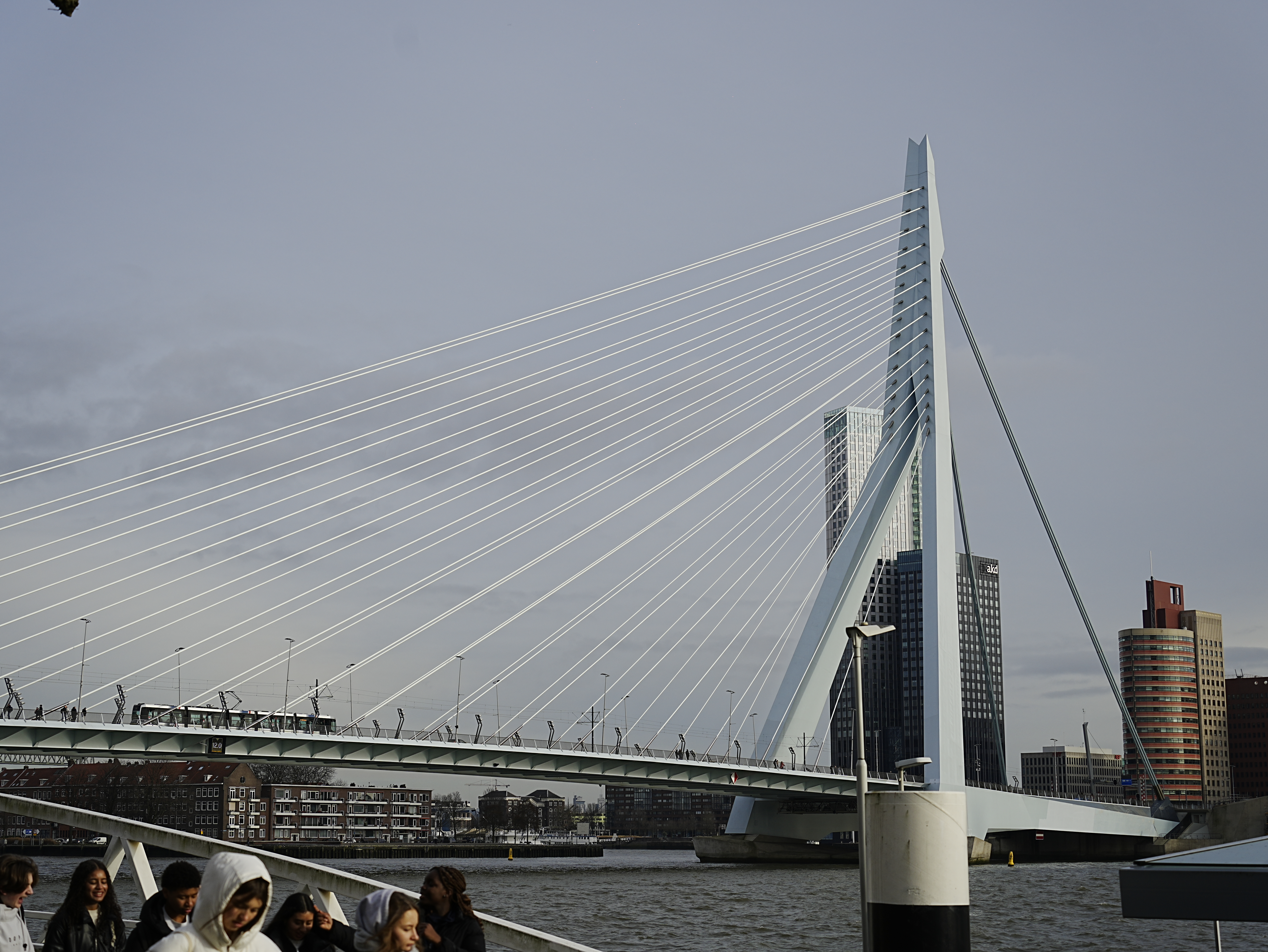
Figure 1-4. Erasmusbrug and Wei’er Bridge
I cannot be sure that readers can fully understand the subtle feelings within the opening scene, and this potential confusion points to the core of this paper: cultural memory. We share the same memories, therefore we relate, vice versa. In his essay “Culture is Ordinary”, Raymond Williams opens the discussion with two paragraphs of his memories. As he implies the multilayered nature of culture through his life path from the Welsh valley to Cambridge, I notice how the origin of cultural reflexivity can be deeply rooted in the memories, and this naturally leads me to reflect: what exists in my memories that reveals or refers to academia? To explore myself, I approach the form of autoethnography. Although Williams’ article is not essentially an autoethnography, the way he used his personal experiences in an academic essay still inspires me to explore the normative “rules” within media and cultural studies. This essay is an autoethnography, which has four parts. Starts with my perspective of “What Is Culture”, since culture is rooted in memory, I became aware of the dislocation within my own memories. I suggest that “‘In-Betweenness’ is Knowledge Rather than Mere Obstacle of Relating”. For transcultural observers, to transform the in-betweenness into valid materials for research, autoethnography serves as a useful method – one that I explore in the third section of the essay. Ultimately, the sections above answer the question of “What is, and Should Be ‘Normal’” in media and cultural studies from my point of view – the concern of cultural resonance, origin from the deepest, most significant memory, which is something we can hold on to.
What Is Culture?
There is a trend on Chinese TikTok recently – “I am a child of the north, always.” Spring festival, late-night fireworks on snow, lucky coin in dumplings… I was moved and sent these videos to my friends from Shenzhen and Wuhan, they perfunctorily replied with an emoji. Apparently, they did not resonate with me in this trend, most viewers from the southern part of China did not. These objects turn into semiotic elements that symbolise northern China from their perspective, however, these are always the most memorable, concrete memories within my past, now, and future.



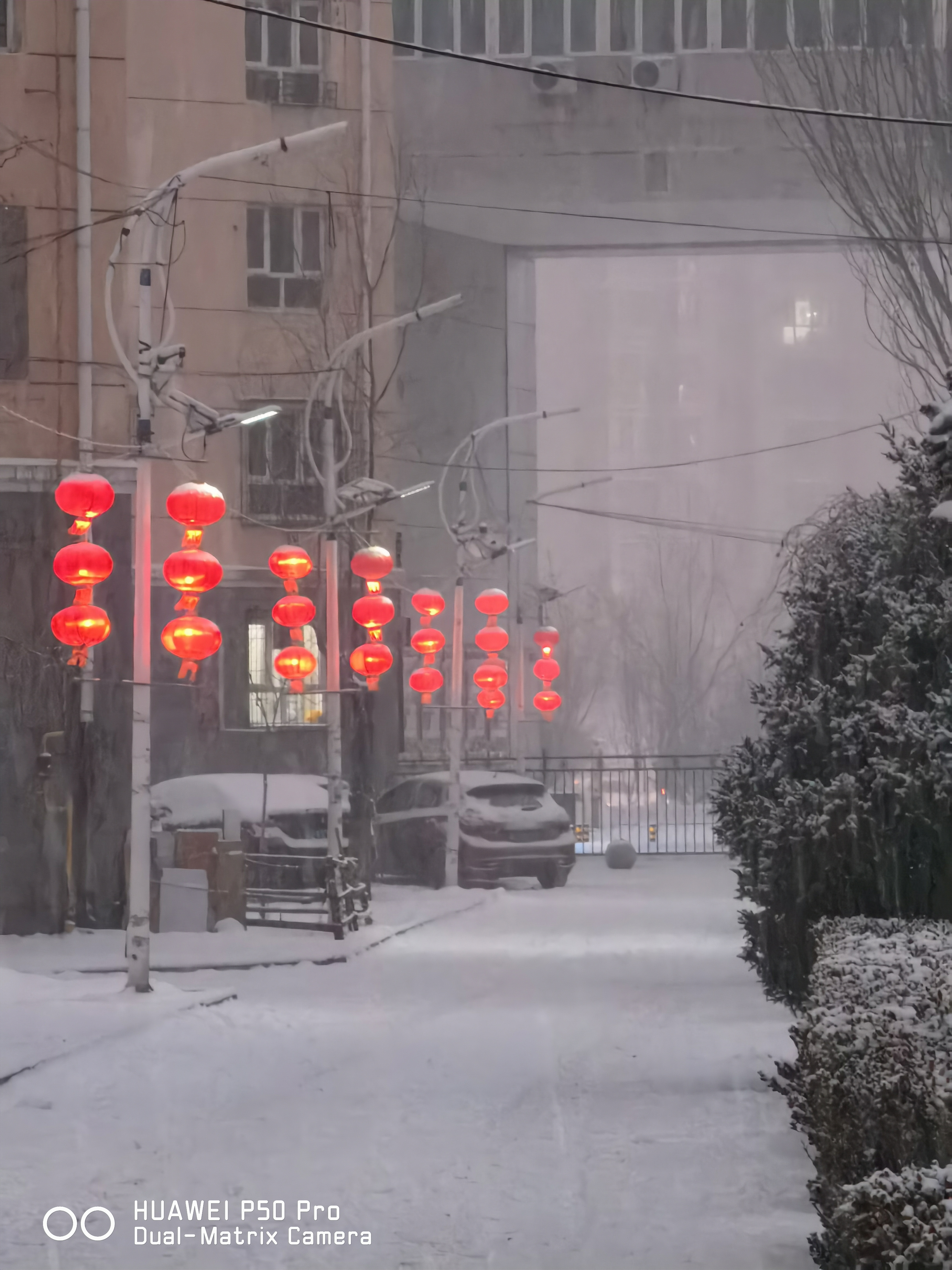
Figure 5-8. “I am a child of the north, always”, scenes in my memory that southerners might never understand
To explain the absence of resonance between my friends and me, or southerners and northerners, we can simply attribute to that southern people do not know the northern culture, but why do not they know? What is the essence of the cultural differences? These questions lead me to realise that culture is not a pre-defined category, but a collective memory that naturally emerges from the overlap of individual memories. Southerners do not share a common image of the past with us: there is no snow in the winter in the south; people eat Tangyuan instead of dumplings during Spring Festival. These objects, to them, are not their embodied cultural memory but abstract social knowledge without the support of sensory experiences. In contrast, we northerners, who live in similar physical and social spaces, inevitably share similarities in experiential memory. Every individual memory constitutes itself in communication with others, as Assmann and Czaplicka describe, who conceive their unity and peculiarity through a common image of our past that makes us a group.[1] From my perspective, the essence of culture is memory – rather than an abstract semiotic system, culture is concrete, shared experiences and memories. The understanding of culture as lived, embodied experience is inspired by Williams’ foundational insight. He argues that culture is “made by living, made and remade, in ways we cannot know in advance”[2] – it is not a pre-existing structure to be learned, but an ongoing process of creating common meanings through experience. For northerners, no symbols are waiting to be decoded, but memories waiting to be recognised. This is what Williams means when he insists that culture must be “brought to consciousness and meaning” through the whole actual life.[3] This is also why culture is diverse across the world: whenever we share the same memory of anything, we create and share a culture named after what resonates among us. For example, Utrecht University could be a culture since thousands of students study here, we all know the ground of Janskerkhof is slippery after rain, or which building has the cleanest restroom. These concrete, ordinary details shared among students are the components of culture – not abstract symbols, but lived, embodied memories.
“In-Betweenness” Is Knowledge Rather than a Mere Obstacle of Relating
Because I have a better understanding of “my” culture, in the past year, I have always integrated Chinese cases into my coursework. Especially in the assignments, I tried to use what I learned from Western theories to analyse Chinese cultural phenomena, both in essays and presentations. For essays, I do not think the culturally specific materials are inappropriate – my teachers are happy to see fresh examples from other cultures. However, when I put “my” things on the slides, all of the confidence I gained from my essay feedback collapsed – screaming, but in silence. I only presented Chinese cases in the seminar twice, and both times felt awkward: there was usually a Q&A section after everyone’s presentation, my extrovert classmates always had plenty of questions to ask, while what I experienced after the speaking was just polite, obligatory applause, and then silence. “Are there any questions for Lavio?” After my teacher asked this question, there was a thirty-second silence, with everyone staring at me with confused eyes. They did not have the context for understanding why and how this case happened and relates to the theories. At that time, I suddenly realised that even the feedback from my teachers is mostly about the concept use or universal pros and cons as well, rather than truly understanding the subtle undertones of the cases. I felt embarrassed, thinking that if I were a European or American who was born in the “mainstream” culture, I could choose some more relatable topics to inspire my classmates. We do not share the same cultural reference points – the same memories, symbols, and unspoken understandings that make a case resonate. The absence of shared cultural memories distanced us in the Q&A, alienating the class into “Western” and “Orient”.
The “awkwardness” I experienced after the presentation is not merely a personal discomfort, but an analytically productive moment that reveals hidden dynamics of academic communication. This moment reveals two interrelated insights. First, academic communication – especially in oral form – relies on shared cultural memory as its infrastructure: without this memory, even articulated theoretical analysis fails to resonate. Second, the so-called “universal theories” require cultural context to be critically activated – they can be applied across cultures, but cannot fulfill their critical mission without the embodied experience that animates their concepts. Take the presentation I mentioned as an example. I analysed the “Sis Hong incident” – a case that a transgender woman was arrested for selling sexual videos. Using transgender theories, I examined how Sis Hong’s gender identity was systematically erased in public discourse, with people insisting on using biological-based pronouns “he/him” rather than her self-identified gender. For me, this theoretical analysis was not merely a technical demonstration of how theory fits a case, but a revelation of lived oppression. As a gay man in China, I carry the embodied memory of how LGBTQ+ identities are rendered invisible in everyday discourse. This experiential knowledge allowed me to recognise that gender erasure is not just an analytical category, but a description of factual violence I had witnessed and navigated. When the theory “worked” on this case, it did more than demonstrate applicability – it exposed the mechanism of oppression embedded in my cultural memory. In contrast, to my classmate, the same theoretical analysis remained at the level of technical demonstration. They could follow the logic of gender erasure, see how the theory explained the case, but could not access the critical dimension of the theory – the capacity to identify and challenge structures of domination. This is the “critical activation” I mentioned before: the theory is activated not because it can be applied to a case, but it can function as a critical tool to reflect the society. This activation requires the cultural memory of living in the particular public space, while the lack of memory makes the theory become a descriptive tool rather than a critical weapon. As Heewon Chang observes, in a transcultural setting, “self and others are not organically interconnected; rather, such interconnectivity must be intentionally desired and achieved.”[4] The classroom silence exemplifies this disconnection: without shared cultural memory, even articulated theoretical analysis fails to resonate. Moreover, although the diversity is welcomed, the absence of shared cultural memory creates invisible barriers in academic communication: transcultural researchers need to constantly proceed cultural translation – not only the facts of the case, but also the affective weight it carries, the collective trauma it evokes, the silences it breaks. This labour is exhausting and usually unsuccessful, while the uneven accessibility remains invisible. This raises a methodological question: if my in-between position serves me the ability to visualise these dynamics, how do I systematically apply this advantage in research? How do I transform moments of awkwardness into rigorous analysis? This is why autoethnography – a research methodology that allows me to analyse my own experiences while observing cultural phenomena from a reflexive position – is essential in my point of view.
Autoethnography – A Useful Method for Transcultural Studies.
I left Erasmusbrug, walked back to Rotterdam Centraal, passed the Chinatown in front of the station. It was almost Chinese New Year, the whole street was hanging red lanterns, which is a stable partner with cold air. The same red, but not my own. I had not bought the ticket home at that time, so I was a bit homesick when I saw these “symbols” of CNY. I use the term “symbols” to refer to the lanterns on purpose – they are lanterns, that is the fact, but something just spiritually different from the lanterns in my memory, so they are just a symbolic image for telling me and the Netherlands: “NOW IT IS CHINESE NEW YEAR”. Embraced with the estranged CNY atmosphere, I realised that the new year here is not for me, a temporary guest. They are made by and for the Chinese Dutch, whose New Year memory is mostly recorded here. Since I used the terms “they” and “I”, the answer is already clear: even though culturally we are speaking the same language or cooking in the same way, we are not sharing the same ethnicity in my mind.
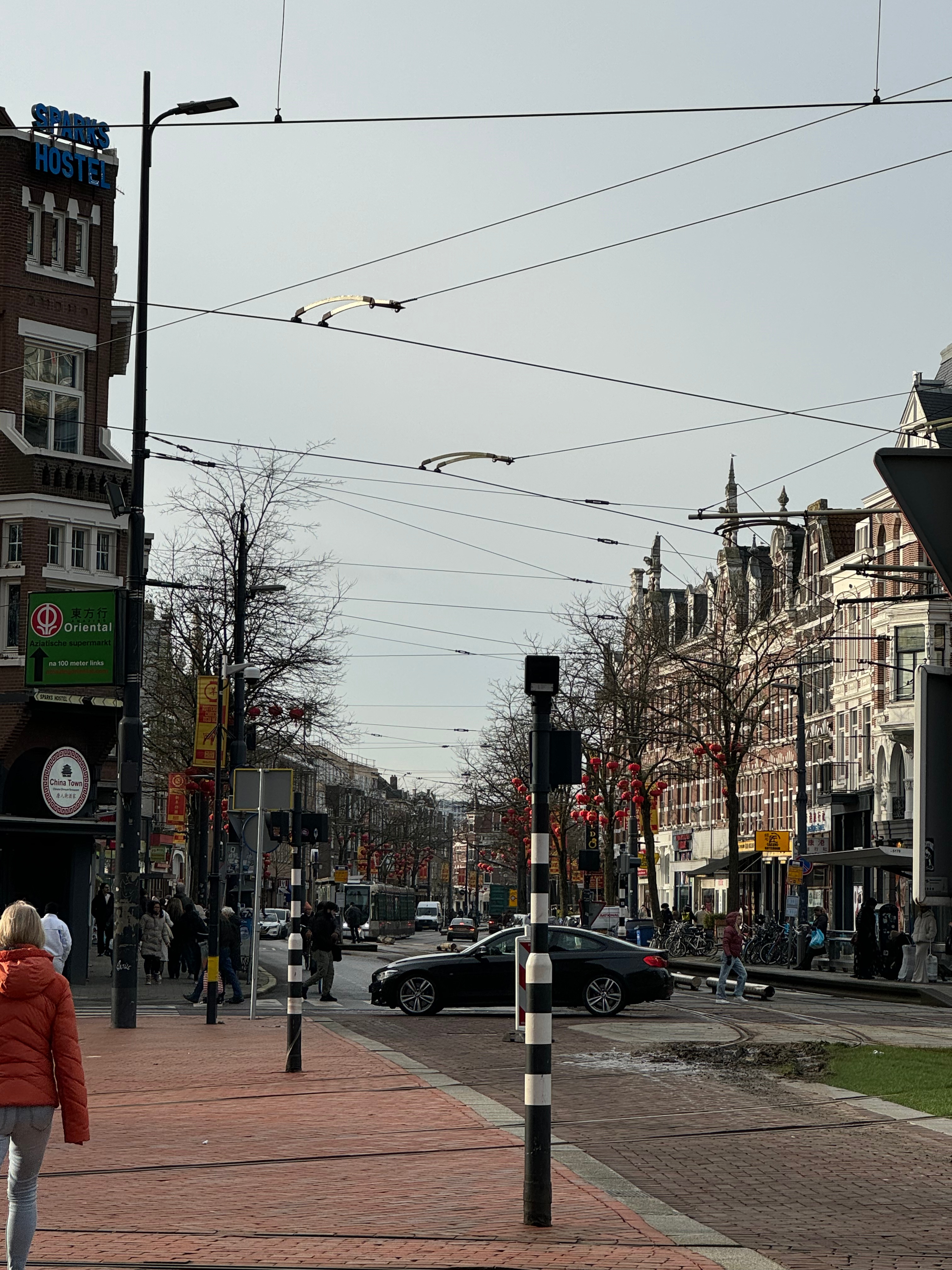

Figure 9-10. The Chinese New Year in the Netherlands and my hometown
The unconscious action of using “they” and “I” to distinguish Chinese citizens and Chinese Dutch embodies the psychological estrangement within the same ethnicity. This estrangement reveals a fundamental issue: I was disciplined by China’s public discourse, which usually constructs a complex, even negative narrative on the Chinese diaspora – especially immigrants. In my memory, immigrants are used to imply “choosing another country” or even “betraying the community” in some context. Although these narratives are not officially claimed, they still appear in daily conversation, news reporting and social media content, constantly construct my unconscious judgement of “who is my people”. What underlies this estrangement is the “uneven terrains” of identity representation – not all of the Chinese diasporas are equally appreciated or identified, the diasporic Chinese-ness is frequently portrayed as highly situational.[5] For example, Eileen Gu is labeled as Chinese since she won the Olympic gold medal on behalf of China, even though she is half-American and holds dual citizenship at the same time. While most ordinary Chinese immigrants are invisible in ethnic narrative, even implicitly questioned for their loyalty to Chinese identification. Show Ying Xin and Sai Siew-Min question the construction of uneven terrains: “Who speaks for the Chinese diaspora? […] What authoritative notions and narratives underwrote this uneven appreciation of diasporic Chinese identities?”[6] In my experiences, the authority is embedded in public discourse, rather than a certain policy texts. It shapes my primary response towards Chinese Dutch, divides us as “they” and “I”.
The brief analysis above is my self-reflection after I captured the estrangement. As a transcultural observer, I neither belong to China (I study abroad) nor the Netherlands (my cultural memory rooted in my birthplace), this in-between position allows me to escape from the propaganda of both sides to some extent. From this perspective, I can experience two kinds of tension of cultural belonging simultaneously, and realise the tensions themselves are the result of the operation of discourse power. This process of recognising how my judgement was constructed exemplifies autoethnography’s methodological value. As Chang describes, autoethnography “combines cultural analysis and interpretation with narrative details,” requiring that personal experiences be “reflected upon, analyzed, and interpreted within their broader sociocultural context.”[7] Here, autoethnography demonstrates its methodological value: it is not merely recording the observer’s personal feeling, but promoting them to reconsider the normalised cognitive edges from an inside perspective. When I wrote down “they are not my people”, I also questioned “whom, through what way, constructs my judgement?” This reflexive practice is essential in transcultural studies – only when researchers themselves can realise the contructedness of their opinion, they can truly understand how cultural differences are produced, organised, and unequally distributed.
What Is, and Should Be “Normal”?
Culture is memory, I have established this claim throughout this essay. Although memory exists as mental representations, it remains fundamentally grounded in concrete, lived experiences within specific spatial and temporal contexts. If culture is solid and tangible in this sense, then studying culture demands equally grounded methodologies: empirical engagement with the specificities of lived cultural practices. This orientation toward empirical research is not merely a personal preference, but reflects deeper epistemological traditions. In their analysis of Chinese communication studies, Liu Hailong and Qin Yidan identify a distinctive tradition of “practical rationality” that has profoundly shaped research paradigms in Chinese media scholarship. Rooted in Chinese philosophical orientations, this tradition emphasises ethical thoughts and practical value while downplaying abstract and logical reasoning.[8] Rather than treating theory as an end in itself, practical rationality positions scholarship as a tool for addressing concrete social problems and ethical concerns. This approach, while emerging from specific cultural contexts, points to a broader methodological principle: that theories must remain connected to the empirical realities they claim to interpret. The risk of abstracted theory is exemplified in my recent engagement with Judith Halberstam’s The Queer Art of Failure. I analysed a Chinese influencer whose actions embodied what Halberstam would theorise as “failure” – a deliberate rejection of normative success that constitutes resistance. However, when I examined how audiences actually received this influencer’s content, I found that her “failure aesthetic” was not recognised as resistance but instead dismissed as merely negative. The gap between theoretical interpretation and social reality is unambiguous. This disconnect roots in Halberstam’s fundamentally symbolic approach. As he writes, “It is this understanding of “textual darkness,” […] that I believe resonates with the queer aesthetics I trace here as a catalogue of resistance through failure.”[9] The term “catalogue” represents that his discussion involves collecting and categorising diverse representations of “failure” as aesthetic forms, rather than examining how “failure” actually functions as social resistance in lived contexts. While Halberstam’s framework possesses the capacity to identify and interpret forms of resistance that operates outside mainstream recognition, from my perspective, it remains incomplete without empirical grounding. If “failure” is to function not only as an interpretive lens, but also as a resource for actual resistant practice, the theory must engage with how “failure” is experienced, enacted, and received in specific cultural contexts. The stakes of this abstraction are not merely academic. Consider the example Halberstam uses when mentioning “weapons of the weak” – the idea that Scotts’ slow work or passivity might constitute forms of resistance. From a symbolic reading, such acts can be interpreted as resistance, but from the perspective of those who lived these realities, the “resistance” might results in brutal punishment or death. The symbolic interpretation risks romanticizing struggles that have actual consequences such as violence and suffering. This is why empirical engagement – attending to lived experiences, material consequences, and situated meanings, is epistemologically necessary to cultural analysis.
Nevertheless, empirical research alone cannot resolve the deeper issues I have traced in this essay. The problem is not only that theories remain abstract, but also that they emerge from and serve to specific cultural contexts. As I mentioned in Section II, so-called “universal theories” require cultural context for critical activation – the capacity to function as tools for identifying and challenging structures rather than merely technical application. In a multipolar world where diverse cultural formations demand recognition, the Western-centrism of media and cultural studies represents both an epistemological limitation and an ethical failure. Transcultural studies, which is not only an application of Western theories to non-Western cases, but also as a distinct mode of inquiry that takes cultural difference seriously, offers a possibility to de-Westernise the current studies. This involves more than analysing multiple cultures. It recognises diverse epistemologies, positions non-Western perspectives as significant subjects in knowledge production, and transforms transcultural researchers from “problem of cultural difference” into “resources of cultural interaction”. In this multipolar world, transcultural research should be normalised in media and cultural studies. Returning to the essence of culture: memory serves as an ideal entry point for transcultural researchers allowing them to accumulate memories from multiple cultural contexts, experiencing the tensions and resonances between different normative systems. Autoethnography, as a systematic methodology for excavating and analysing these memories, provides a concrete method for realizing this ideal of decentralisation.
What, then, should be “normal” in media and cultural studies? My answer emerging from these reflections, it is multifaceted yet fundamentally interrelated: we should normalise empirical engagement with lived culture; normalise the decentering of Western theoretical hegemony; normalise transcultural research as a distinct mode of inquiry; and normalise autoethnography as a rigorous method for those who carry memories across cultural boundaries. These interconnected dimensions reveal a single imperative: to recognise that culture – ordinary, concrete, remembered – is something we can, and must, hold on to.
Afterword
I sincerely appreciate the opportunity to attempt autoethnography in the Honours Exploration. This first try has been confusing, and I have to admit that this essay is somehow below my expectations. I struggled with balancing language styles – neither too analytical in the autobiographical sections nor too informal in the ethnographic analysis – and I was uncertain whether my personal experiences were important enough to warrant academic attention. The most challenging part was navigating between two competing logics: one that begins with contextual exploration and gradually builds toward an argument, and another that follows the traditional academic model of stating claims upfront. I chose the former, starting each section with my memories, and let the free flow discover the core I want to claim. Coincidentally, this approach reflects a typical feature of Chinese academic writing, where arguments emerge gradually from context rather than being stated at the beginning. Even though I was not educated in the Chinese system, this natural preference for contextual, narrative-driven thinking seems to be something I unconsciously carry. At times, I felt this essay was failing – though I could not explain why. But reflecting on this, I realise that perhaps this essay has achieved something meaningful, it allows me to think with my memories rather than despite them. Recently, I came across my tutor Alec’s reflection on invisible intellectual lineages – those influences that shape our work in ways we cannot always cite – about cherishing the insight from creative and metaphorically driven-thinking, exploring culture as if telling ourselves the story, writing for the audience who will bring out what we need. I have been learning to use the humanities as a lens to understand the world, this time, I turned that lens inward to understand myself and the relation to the world. I think I have indeed learned something from them.
[1] Jan Assmann and John Czaplicka, “Collective Memory and Cultural Identity,” New German Critique, no. 65 (1995): 127, https://doi.org/10.2307/488538.
[2] Raymond Williams, “‘Culture Is Ordinary’ (1958),” in Raymond Williams on Culture and Society: Essential Writings, ed. Jim McGuigan (London: Sage, 2014),7, https://doi.org/10.4135/9781473914766.
[3] Ibid., 7.
[4] Heewon Chang, Autoethnography as Method, 1st ed. (New York: Routledge, 2008), 28, https://doi.org/10.4324/9781315433370.
[5] Ying Xin Show and Siew-Min Sai, “Reassessing the Chinese Diaspora from the South: History, Culture and Narrative,” Inter-Asia Cultural Studies 24, no. 4 (2023): 579, https://doi.org/10.1080/14649373.2023.2221489.
[6] Show and Sai, “Reassessing the Chinese Diaspora from the South,” 579-580.
[7] Chang, Autoethnography as Method, 46.
[8] Hailong Liu and Yidan Qin, “Toward a New Media Study in China: History and Approach,” History of Media Studies 1 (October 2021), https://doi.org/10.32376/d895a0ea.e7da2342.
[9] Judith Halberstam, The Queer Art of Failure, (Durham, NC: Duke University Press, 2011), 97, https://doi.org/10.1215/9780822394358.
 Lavio Rens

Leave a comment